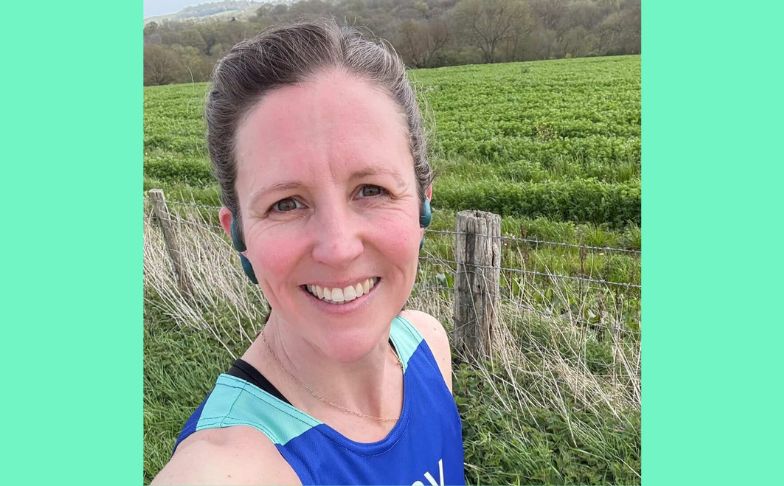
Imogen is running the London Marathon for Mind on 26 April. Here, she shares her story and explains why supporting her local mental health charity is so important to her.
Content warning: this post discusses suicide
This is a story that doesn’t feel easy to tell, but I’ve come to understand the power of sharing stories, for us as the storytellers, but more importantly for those reading them and who might need to hear it. They can change things and have real impact, they can make people feel less alone. I have certainly felt that reading other peoples generous stories, so here is a bit of mine.
In April 2026 I am running the London Marathon for (national) Mind, but it’s West Kent Mind that started this journey for me.
Why I wanted to speak up
When I first joined the team Mind Facebook group, I read post after post from people running in memory of someone they’d lost to suicide. It really moved me but also brought up a strange, but not unfamiliar, feeling of guilt.
Because I wasn’t running in tribute to someone else. I was running because of something that happened to me. when I was sixteen I took an overdose. I don’t frame it as a suicide attempt, because I think it was a cry for help, an impulsive response to circumstances I didn’t have the tools to navigate. But it happened, and it has shaped so much of who I’ve become, more than I had realised.
Carrying shame
For over two decades, I carried enormous shame about that day. I didn’t speak about it, not at the time (I said what I thought I was supposed to to make everything go away) and not for years after. I wanted to disappear from it entirely. Returning to school felt unbearable; I was convinced everyone knew and was quietly judging me for being foolish and terrible and a burden to the people I loved.
Those feelings stayed with me far longer than I realised. It wasn’t until I started counselling, with West Kent Mind in 2025, that I began to really see how much weight I’d been carrying.
Counselling was strange at first, and then completely transformative. It didn’t “fix” me — I was never broken — but it gave me tools to understand myself more clearly, to reflect, to begin the process of genuine forgiveness. To start to let some of that shame go.
Learning to forgive myself
Even as I write this, a part of my brain tells me I’m being self-indulgent. That other people have lost loved ones to this illness, and who am I to take up space with my story?
But that voice is exactly the problem. Learning that this was not my fault, that a sixteen-year-old who didn’t yet know how to ask for help, who couldn’t find the words, who didn’t even know there were words, is something I’m still working through. Understanding that feels important and so does saying it out loud.
I want to be clear: my family are, and always have been, loving and supportive. The guilt about the impact on them, especially my parents, is something I’ve carried alongside the shame, and I can only imagine how they experienced it. Now that I have children of my own, I feel that so much more acutely.
Shame hides. It stays quiet and persistent and does its work in the dark. When we bring it into the light and say it aloud, its power starts to shift.
Who I’m running for
This is just one thread in a longer story, there are all sorts of challenges I’ve faced and things I struggle with today, but this felt like the part that was mine to share and needed sharing.
When I read about the people running in memory of loved ones lost to suicide, I caught myself thinking: am I running for myself? Is that allowed? It felt conflicted, almost presumptuous.
But actually I know it’s not just for me at all, I’m running for my children, for my husband and my family, for friends. For the people I’ve met through the watercolour workshops I’ve run with West Kent Mind. For people I’ll never meet who are sitting with shame they haven’t been able to name yet.
And yes, I am also running for myself.
Running is one of a small handful of things that genuinely supports my mental health, as is drawing and painting. I’m so grateful to have those tools and to share them with others.
This marathon feels like a marker, a way of physically moving through something, of symbolically setting down some of what I’ve been carrying.
What I hope for
Nobody should have to struggle alone to find the right person to talk to. Nobody’s financial situation should determine whether they can access support. Mental health care should not come with barriers, which is exactly why organisations like West Kent Mind, and national Mind, matter so much.
I want mental health to be something we talk about with the same ease and seriousness as physical health. Not as a special topic, not whispered or skirted around, but as part of ordinary human conversation. Everyone has mental health. It shifts and changes, it is not a character flaw and it is not fixed.
If more of us could talk openly, listen without judgement, and recognise the genuine complexity of each other’s inner lives, I think things would look very different.
Thank you to Mind for having me on the team. And thank you to West Kent Mind for the support that made this possible.